

Despite more than 300 years of colonialism on this part of our land, the place now called Mpumalanga province remains an area with the most arable land in South Africa, accounting for more than 40 percent of high-potential arable land. This land has both a Highveld and Lowveld region, each of which produce different crops and fruits seasonally.
Most of the land in South Africa remains in the hands of the white settler minority (which accounts for less than 10 percent of the population) even after more than 32 years since the banishment of apartheid. They own and control more than 87 percent of the land overall and about 72 percent of farms.
The Mpumalanga’s Project Thuthukani is the most practical political work of the Uhuru Movement that shows how African Internationalism is building self-determination for the African nation through independent institutions for economic development to feed and clothe ourselves—something that colonialism took away from us.
Chairman Omali Yeshitela writes, “When we talk about the struggle for self-reliance, for economic development, we are talking about the ability to produce and reproduce real life…. We must begin to build our own power.”
The Chairman teaches us that European wealth is the result of the attack on Africa that resulted in Africa not being able to be self-reliant and thus keeping us in a permanent state of dependence as an entire nation.
The work of the Uhuru Movement is to overturn this colonial setup. This is evidenced through the work in local branches happening in South Africa and wherever we are organizing.
Those who feed you control you!
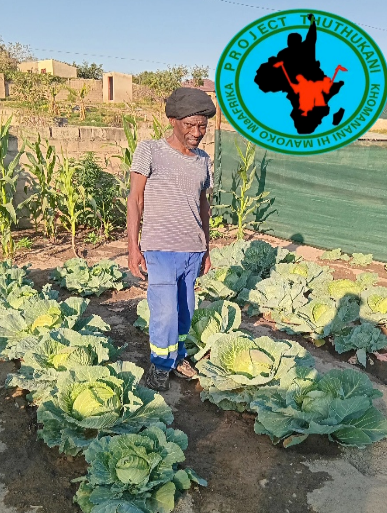
The colonial mode of production has programmed the people to think food comes from the malls and big retailers and that the land is not important. Hence, there is so much desperation in our community. However, since the initiation of Project Thuthukani’s Community Garden, we have harvested cabbages, onions and other crops that have generated income for the branch while feeding the community.
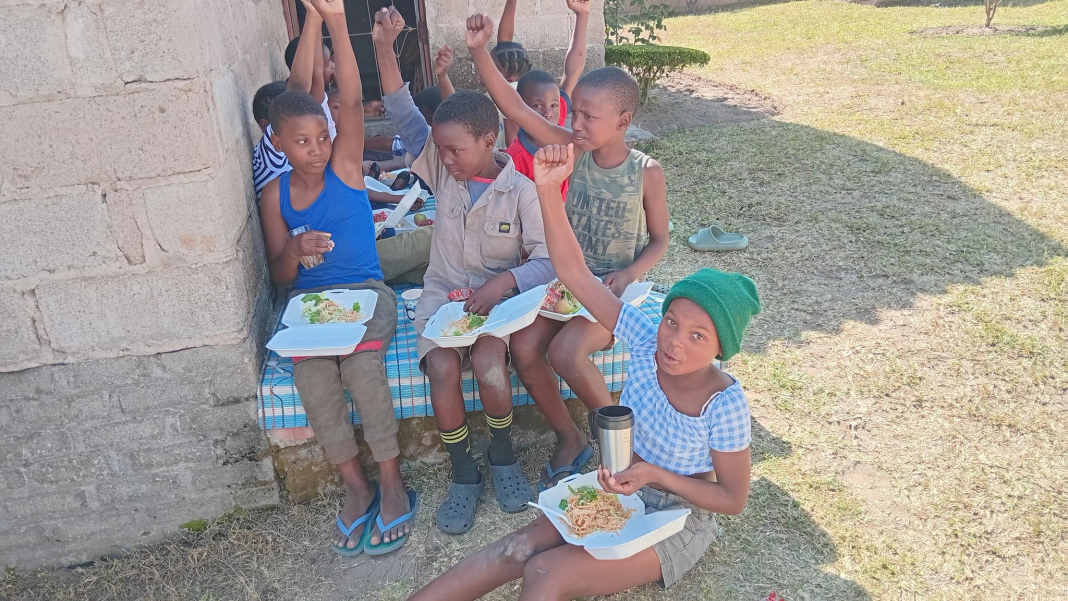
This project is a success in that it is bringing back the culture of growing our food right where we are located and encouraging trade amongst our people. It also sponsors our Uhuru Children Fun Days with the resources raised from selling the biggest and healthiest cabbages—the production that we make through the land is also shared amongst our volunteers to encourage them to continue their labor. This helps to build the community and show what the people can achieve when we are organized.
Project Thuthukani had distributed seedlings to the community to promote self-reliance and food security and it has been in the works locally for 3 years now.
When we began, we obtained some part of the land from a local church which did not materialize due to its distance far away from the branch leaders and lack of volunteers—despite the church having some very fertile land. This contradiction did not stop our commitment to establish our agricultural program.
In late 2024, land was discovered that had potential for the program as it had access to water. What made this project successful above everything was the commitment found from one of our volunteers, brother Oupa Nkosi, who stays where the land is located and has since become a member of the International People’s Democratic Uhuru Movement-South Africa (InPDUM-SA).
Brother Oupa has volunteered not only his land to the Movement but also his self-taught agricultural skills and labor. This in return gave benefits for all volunteers who assisted in our project.
Contradictions and challenges of Project Thuthukani
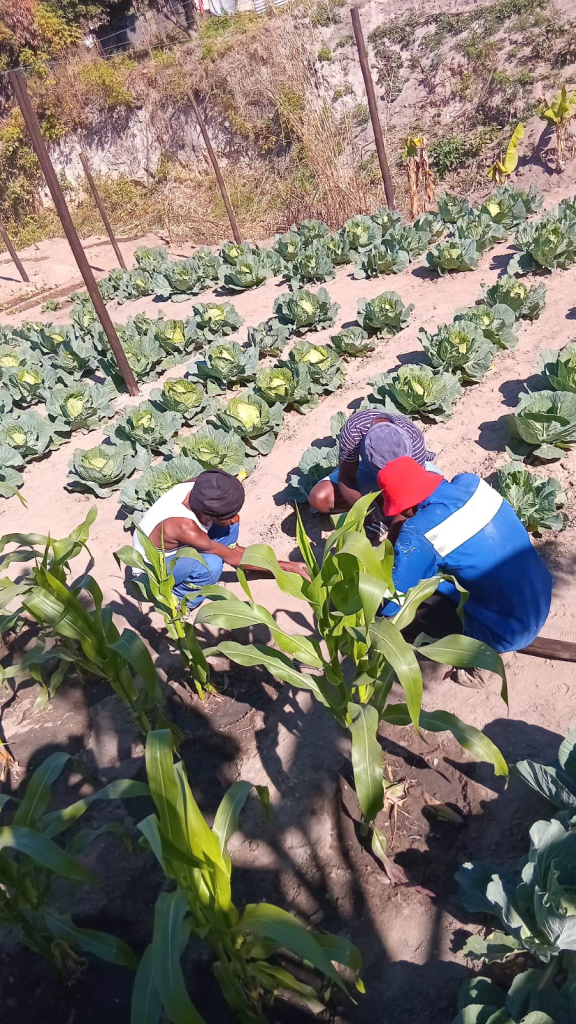
The initial goal was to have a greenhouse structure for vegetable crops such as spinach, lettuce, beetroot, etc. so that we can protect the produce from birds in the area that can consume almost a whole lettuce—making our work difficult in this regard.
The structure was built but as we were short of resources, it couldn’t be completely closed, resulting in strong winds that took it down three times. Though the greenhouse is necessary for us to be able to grow crops even during summer, its lack has been something we have worked around in order to continue our work. Cabbages can still be grown without an issue and they are the one product that has generated the most income.
Our aim is to establish an Uhuru Farm in Mpumalanga which will be an economic institution under African People’s Socialist Party Deputy Chair Ona Zené Yeshitela’s direction, led in the same manner that she has led Shamba La Uhuru Farm. Africa has more advantages in securing huge tracts of land in Mpumalanga as it is ideal due to the factors we listed earlier.
Most Africans are idling in the townships due to poor education that does not empower the people to be able to develop our own economy, instead our people are taught to wait until they can sell their labor to our colonial oppressors that continue to bleed us.
As the Uhuru Movement, we understand that we must prepare ourselves to govern. This comes not in doing things for the sake of getting paid, but in doing them because we see a better future for ourselves and our people. Project Thuthukani helps us to professionalize the work in our branch, keeping records of income and expenses and learning to prioritize our spending. We will see the Uhuru Farm in Mpumalanga in the near future.
Politics and economics are one
At the Project Thuthukani’s garden, we do not just do sterile economic work but we fuse it with our political work, giving political education, holding LEC meetings and hosting our events. African Liberation Day 2025 was held in this space.
Protect Thuthukani continues through this year’s winter season with seeds already bought with the resources made from our sales, and our aim is to improve it by producing crops that we struggled to produce in the last season.
The African Revolution presents real independence for the African nation where we can start building power, economic and social, so that we continue to develop Uhuru Communities or liberated territories throughout South Africa as a core way to free our land and people from colonialism.
The Uhuru Movement is continuing the path to total freedom, something that we couldn’t achieve in the 1960s due to counterinsurgency—the consequences of which are evidenced by the worse conditions we are living in under the neo-colonialist settler state here in Occupied Azania. We have learned that freedom will be the result of our own work as everyday Africans.
Forward Forever! Back Never! Build and support Project Thuthukani!
Izwe Lethu! I Afrika!
Uhuru!


