

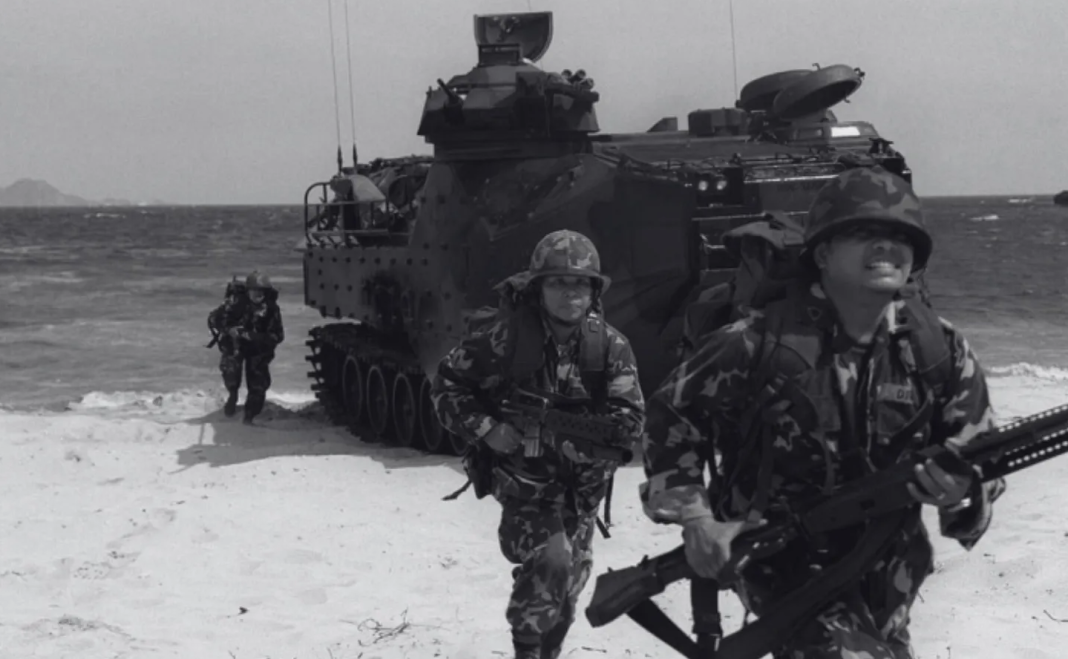
In December 2025, the Armed Forces of the Philippines (AFP), funded by the U.S. government, began bombing Occidental Mindoro in the Philippines. On January 1, 2026, using Black Hawk helicopters and MD-520s, 1,200 U.S. troops dropped 12 bombs on Mindoro. The bombing displaced 188 families, killed three Mangyan-Iraya children, and two students.
Mindoro is home to the Mangyan ethnic group. Most of the Mangyan community has a darker complexion, and the Mangyan-Iraya were found to be a recent branch from Aeta, similar to the Tumandok community which is a branch of Ati. But the State usually reserves bombings for areas of fierce anti-colonial resistance, not regions where a protected ethnic community is the majority population.
Chantal Anicoche, a human rights observer with a Filipino anti-imperialist group, who identified as “Filipino-American,” went to Mindoro to help conduct relief operations in the Mangyan-Iraya community. She went missing on the day of the bombing. Sitio Mamara is presently under military blockade.
To bomb a sitio (which is like the “reservations” on this stolen land called North America), indicates it’s not about being “indigent” as some Filipino reactionaries claim. Communities are often displaced to the sitio. They are living where the State wants them to. The bombing shows that communities in the sitio are not actually protected as they supposedly are under Philippine law. Just like how the police and National Guard are deployed to “fight crime” in African neighborhoods in the U.S., the military and the police in the Philippines say they are crushing the insurgency but they’ve exposed themselves now: they are bombing black neighborhoods.
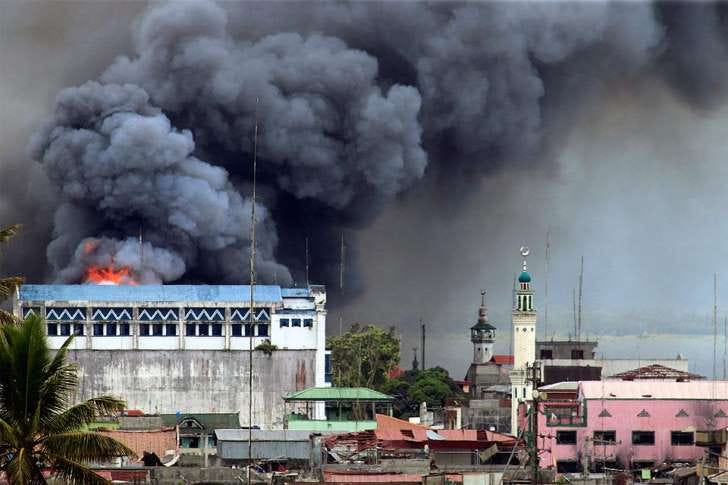
The colonizer creates the “Philippines” for control of region’s resources
Beginning with the U.S. establishment of the Bureau of Non-Christian Tribes in 1901, after the formal surrender of anti-colonial forces, the U.S. has spent decades ensuring colonizer corporations get access to gold, timber-rich and freshwater-rich regions such as the Cordilleras, and nickel, iron and chromite-rich parts of Mindanao.
The colonial State has had a blank check to bomb and terrorize these regions by claiming these communities are with today’s Filipino insurgency, led by poor peasants and broadly supported by Filipino workers.
In the case of Mindanao, colonial attacks are regularly made using the age-old “War on Terror” (anti-colonial resistance) and “War on Drugs” excuses. These attacks are normally waged on the poorest neighborhoods in Manila just as it is on the African working class in the U.S. The State pretends to not notice that these neighborhoods also happen to have a darker-complexioned population.
The Aeta people of the archipelago country, who have a darker complexion and wooly hair, as well as the Ati people, face regular colonial displacement by developers. There has been a U.S. military installment on Aeta land, and the AFP carry out regular repression of the people. It is regarded as everyday enforcement against the Aeta people, and never considered to be warfare, despite the fact that it clearly is.
Chairman Omali defines “Who is an African?”
In his book “An Uneasy Equilibrium,” Chairman Omali describes “Who Is An African” on page 146. In addition to including Africans forcibly dispersed into the definition of those who make up the African Nation, he includes black people whose “presence in other areas predates the assault on Africa. This includes black people in Australia, India, and other places who generally experience a sense of sameness associated with African blackness and the oppression we share because of our blackness.”
Other places? Sounds like many areas in the Philippines, especially those that are heavily militarily occupied, impoverished and exploited.
African identity reaches parts of Asia and Pacific
Thanks to anti-colonial Africans in the U.S. and Africa forging relationships with anti-colonial forces in parts of Asia and the Pacific, since the 1960s, West Papuans have realized they are African. And while, according to the book “Pasifka Black” by Quito Swan, one Filipino has participated in an international cultural festival held on the Continent aimed at consolidating African identity in the Pacific, the Philippine State has gotten away with all sorts of atrocities because African identity has not taken root in the sitios, villages, slums, baryos and provincial towns.
The sitio/colonial border works to keep Africans divided
Chantal Anicoche is the first anti-imperialist from the U.S., that I’m aware of, to go to a sitio. It’s not that sitios and Aeta villages are completely closed-off to the outside, but every video and photoshoot there serves the State and makes it seem as if sitio and village residents are not being oppressed. The AFP took Chantal captive on January 8. As of January 10, she is still captive and Filipino anti-imperialist groups fear that she might be enduring torture despite being “American” according to her passport.
She is being held at Camp Capinpin. At least one Filipino reactionary calls for her deportation and is upset at her supposed interference in Philippine affairs. Chantal also has a darker complexion.
Points 11 and 12 of the International People’s Democratic Uhuru Movement’s (InPDUM) Revolutionary National Democratic Program says every African dispersed around the world is a member of the African Nation, and that all artificial borders between African people must be removed. Looking past colonial terminology, this is the case of a black person crossing the border to assist a black person behind a military blockade. The only solution is for Africans to unite worldwide for self-determination and African Liberation!
Join InPDUM!
This time ‘till it’s won!


