

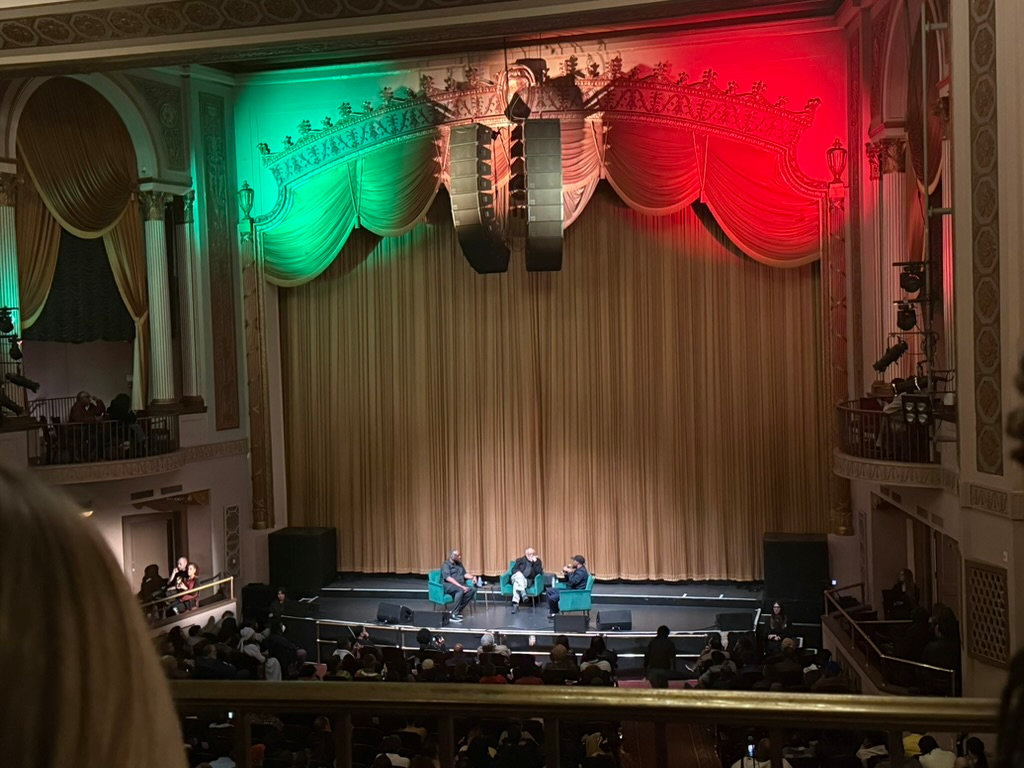
In the heart of Washington, D.C., at the historic Lincoln Theatre—known as “Washington’s Black Broadway”—Africans gathered to watch D.C.’s own Haile Gerima’s upcoming documentary, “Black Lions, Roman Wolves.” After the screening, the audience was treated to a discussion with Haile Gerima himself, extending the experience beyond the film into political reflection.
A portion of “Black Lions, Roman Wolves” was screened for the first time on Friday, February 27, on the eve of the 130th anniversary of the Battle of Adwa on March 1, 1896. This historic African victory crushed Italy’s imperialist ambitions in Ethiopia, while also carrying deep symbolic significance. It marked the first time since the Berlin Conference of 1884–85 that a European power was decisively defeated by an African state.
More than a historical recounting, the documentary represents over two decades of work reconstructing the Second Italo-Ethiopian War from 1935 to 1941. It brings together rare archival footage, including scenes of the royal call to war echoing across the country and rallying people to the front lines. At the same time, the film moves beyond a simple presentation of archival material by turning the camera on itself and revealing the process of its own making.
Throughout the film, Shirikiana Gerima’s narration provides context for the scenes, at times accompanied by shots of her recording in the studio. These moments appear alongside black-and-white Pathé newsreels displayed on editing screens, blending past and present into a single narrative. Rather than taking the viewer out of the story, this approach deepens it by showing that the production of the film is itself part of the broader history of colonialism resisted and defied.
This relationship between filmmaking and resistance became even clearer during Gerima’s remarks after the screening. He explained that producing the documentary required him to secure footage kept under lock and key by the Italian government. In some cases, just a few seconds of footage of Africans rallying against the Italians in the 1930s costs upwards of $40,000. In this way, the gatekeepers of history rob us of what is essentially our birthright as descendants of those who stood up against European colonialism.
This same tendency can be seen beyond film archives. It is the force that tore down the ancient obelisks from Axum and planted them in Italian soil, as well as the one that destroyed the commanding statue of Menelik II atop his warhorse, Tatek. Seen in this light, the making of “Black Lions, Roman Wolves” stands in direct opposition to these ongoing efforts to erase and distort African history. As Gerima himself noted, he sought to use the archival material that the Italians jealously guarded against them, to “convert audiovisual elements to use against the Italian fascists.”
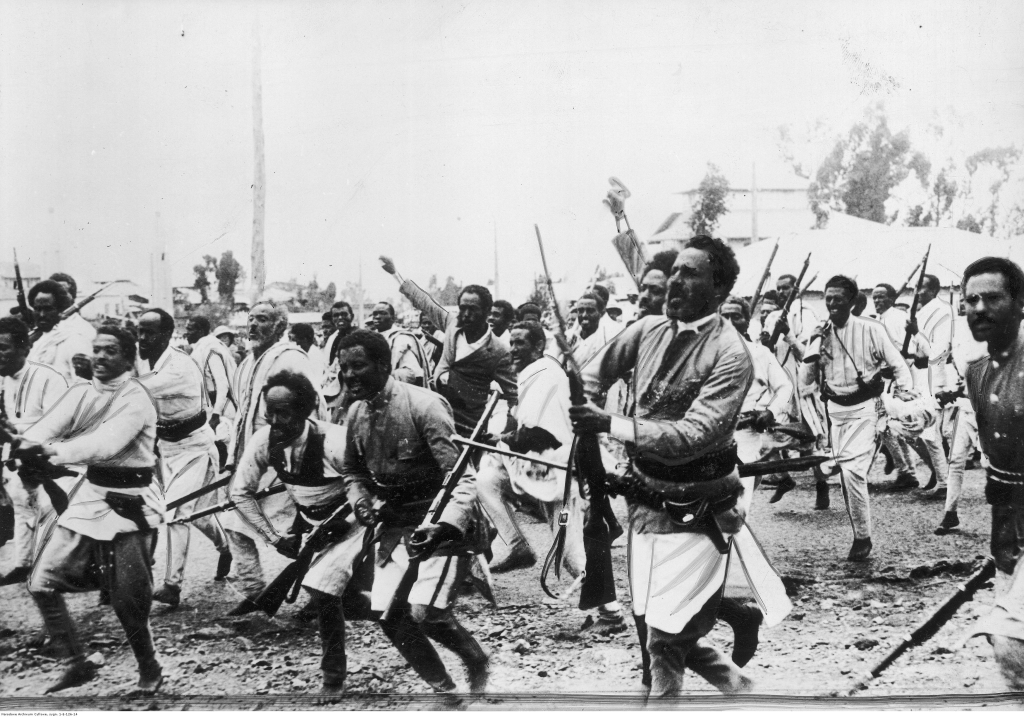
To achieve this, the film does not rely solely on colonial records. It incorporates folklore, war chants, poetry and testimony, ensuring that the narrative is not limited to what Italian media captured during the invasion. At the same time, it challenges the narratives that Italians have propagated since the conclusion of the five-year occupation.
The documentary also confronts the brutality of the war without compromise. During the invasion of northern Ethiopia, Italian forces deployed illegal mustard gas, scalding soldiers, non-combatants and the land itself. This chemical weapon had already been outlawed by the Geneva Convention of 1925—five years before its use on Ethiopians. Despite this, the Italians maintained they used no such gas. However, by traveling to Ethiopia and interviewing those who lived through the war and fought against the Italians, Gerima learned that the outlawed gas was indeed heaved on them like poisonous rain.
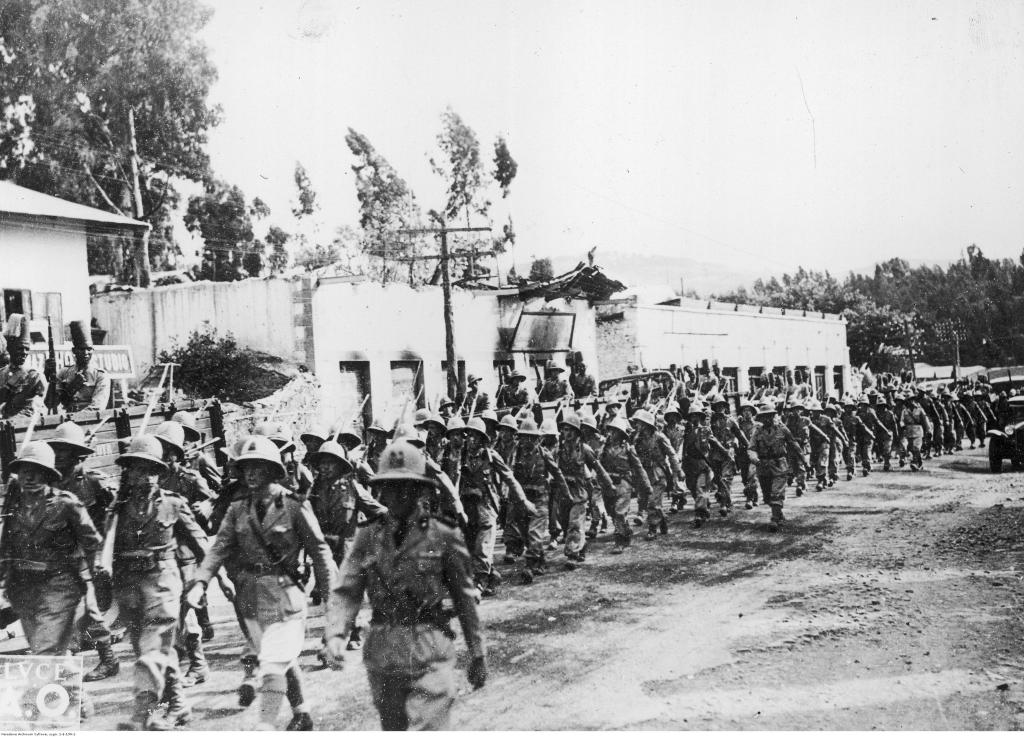
Beyond correcting the historical record, the film also carries a deeply personal dimension. As Gerima notes, the production of this documentary was a process of self-criticism, as he was part of the “generation of Ethiopians who did not learn our history.” This is a sentiment that many Ethiopians of my generation can relate to. He was also, as he noted, “repenting for being Western.”
In this sense, the documentary becomes more than a film. It is a reparative project—a love letter and salutation to those named and unnamed who gave their lives in battle or lived to tell the story. At the same time, it offers an example of how African filmmakers can practice anticolonialism, not simply through reclaiming history, but by showing how African people’s resistance to colonialism is both a birthright and an identity-forming force that continues to shape our struggle today.


