

New Orleans does not simply celebrate Mardi Gras. It lives it.
Beneath the beads, brass bands and Bourbon Street spectacle lies something older, deeper and sacred. The traditions of the Mardi Gras Indians, also known as Masking Indians, and the Zulu Social Aid & Pleasure Club are not costumes created for tourists. They are living cultural memory. They are resistance stitched in feathers. They are Africa and the Indigenous of this continent walking side by side through the streets of New Orleans.
Ceremony in the Streets
The Mardi Gras Indians are among the most visually striking cultural groups in the U.S., but the beauty is not just aesthetic. It is historical and political.
Dating back to the 1800s, black men in New Orleans began “masking” as Indigenous peoples during Mardi Gras to honor Indigenous tribes who sheltered runaway enslaved Africans escaping plantations. The relationship between African and Native peoples in Louisiana was rooted in survival, alliance and shared resistance against colonial oppression.
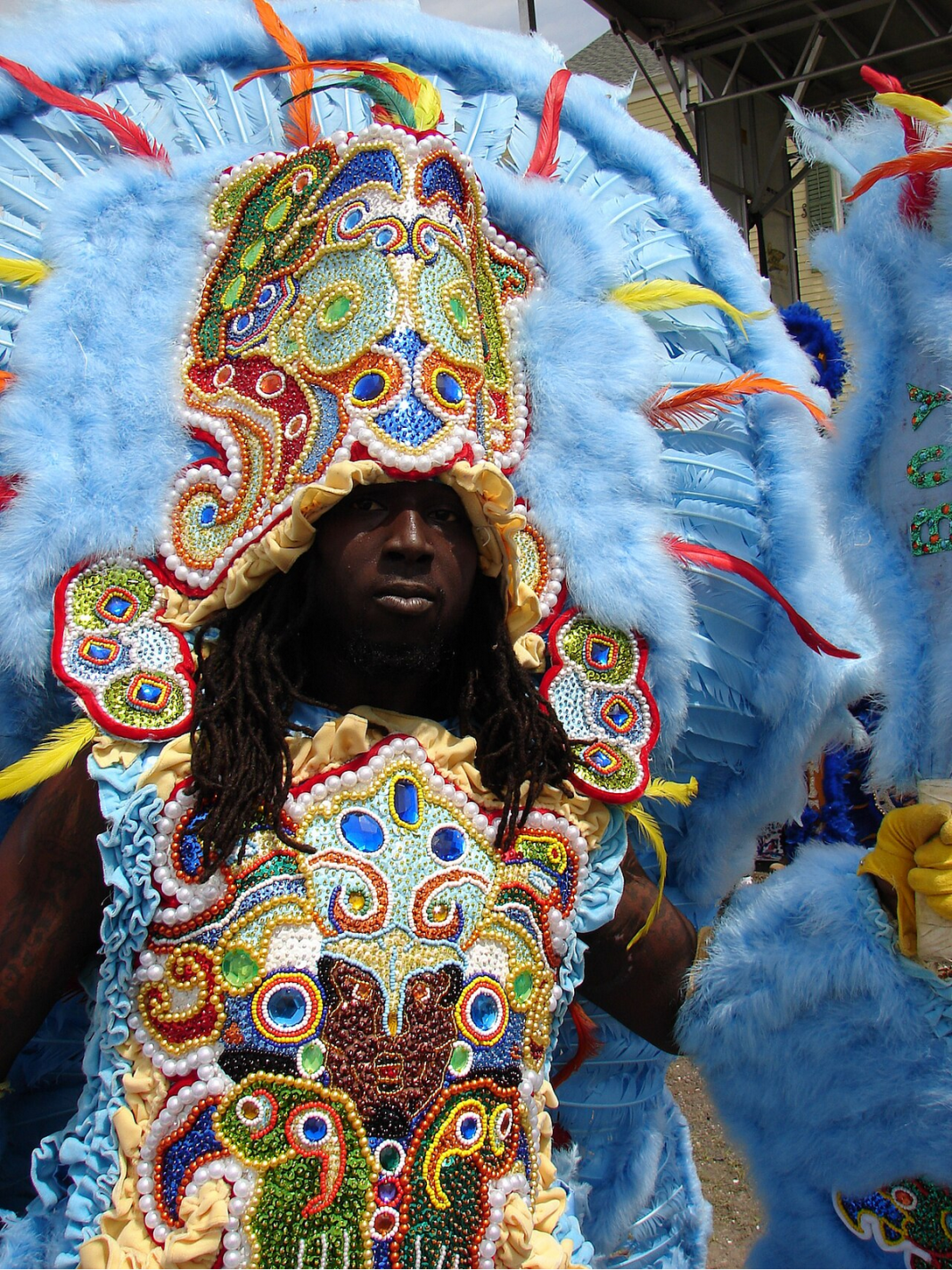
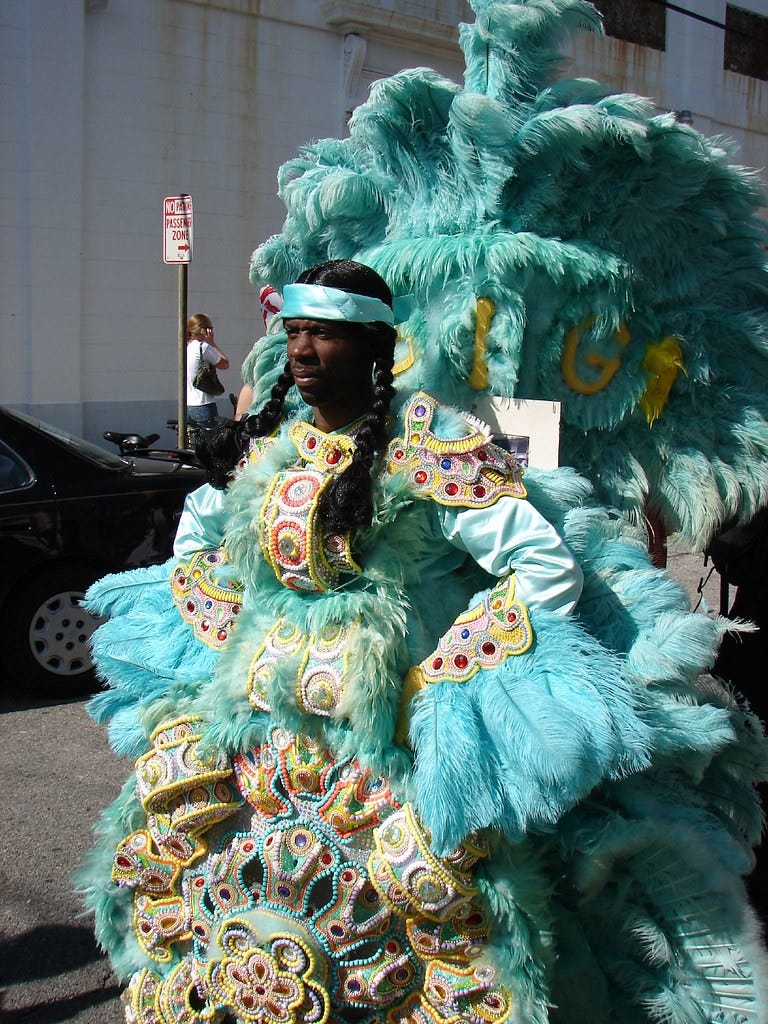
Mardi Gras Indian tribes such as the Wild Tchoupitoulas, Yellow Pocahontas and Creole Wild West emerged, each led by a Big Chief. Every suit is handmade, often taking a full year to create. Thousands of beads. Towering plumes of feathers. Intricate patchwork scenes depicting African royalty, Indigenous warriors, and spiritual symbols.
The suits are not bought. They are built.
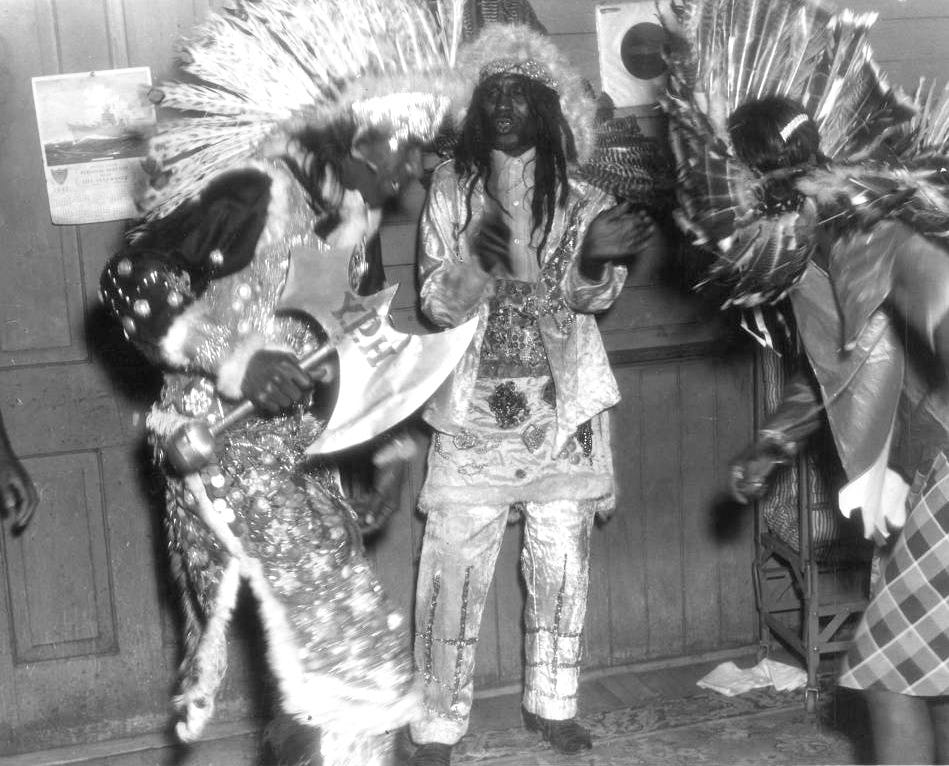
When two tribes meet, what was once violent rivalry has evolved into ritualized confrontation through song, chant and display. The chant, “Won’t bow down,” reflects both pride and defiance. It is a declaration that black culture in New Orleans refuses erasure.
Masking is ceremony. The spiritual undertone is undeniable. Masking carries the same reverence as Yoruba festival regalia or West African masquerade traditions. Feathers symbolize protection and power. Beads represent wealth, honor, and lineage. The street becomes sacred ground.
New Orleans remains one of the few places in the United States where African cosmology survived in visible, public form. Through Carnival, that memory continues.
The call-and-response chants of the Indians echo West African musical traditions. The rhythms mirror the drum languages carried through the Middle Passage. Even without visible drums, the beat lives in the footwork and the tambourines.
Celebration Through the Struggle
Founded in 1909, the Zulu Social Aid & Pleasure Club emerged during a time when black New Orleanians were excluded from many Mardi Gras krewes. Inspired in part by a vaudeville skit and African imagery, Zulu developed a parade tradition that used satire to critique racial caricature and exclusion.
What began as social commentary evolved into one of the most powerful and beloved black Mardi Gras institutions. Zulu is famous for hand-decorated coconuts, a prized throw unique to their parade.
Like the Mardi Gras Indians, Zulu grew from the tradition of black benevolent societies, known as Social Aid and Pleasure Clubs. These organizations provided burial insurance, healthcare assistance, and community support long before government systems offered any such services to black people.
Zulu is celebration layered over struggle. It is joy in the face of oppression. It is black dignity riding high on a float down St. Charles Avenue.
Congo Square
Any conversation about African roots in New Orleans must begin at Congo Square. In the 18th and 19th centuries, enslaved Africans gathered there on Sundays. They drummed. They danced. They traded goods. They maintained languages and spiritual traditions.
The rhythmic DNA born in Congo Square lives inside second lines, jazz funerals, Mardi Gras Indian chants, and Zulu parade beats.
Mardi Gras is not separate from this history. It is an extension of it.
The story of Mardi Gras Indians is not just about pageantry. It is about alliance. Enslaved Africans who escaped into swamps were protected by Native tribes such as the Choctaw and other regional nations. In return, bonds were formed that reshaped cultural identity in Louisiana.
Masking as Indians is both homage and remembrance. It is acknowledgment that black survival in America was never solitary. It was communal.
New Orleans stands as a rare cultural crossroads where African, Indigenous, Caribbean, and European influences fused without fully dissolving one another. The result is something unmistakably local yet globally significant.
Culture, not consumption
Tourism often reduces Mardi Gras to beads and balconies. But for many black families in neighborhoods like the Seventh Ward, Treme and Central City, Mardi Gras morning means searching for the Indians. It means following brass bands through side streets. It means honoring elders who sewed suits by hand for decades.
It means culture, not consumption.
The Mardi Gras Indians and Zulu are living institutions. They are archives in motion. They are classrooms without walls. They are reminders that even under slavery, oppression and displacement, African and Indigenous traditions survived.
And they did not survive quietly. They survived loudly. In feathers. In chant. In rhythm.


