

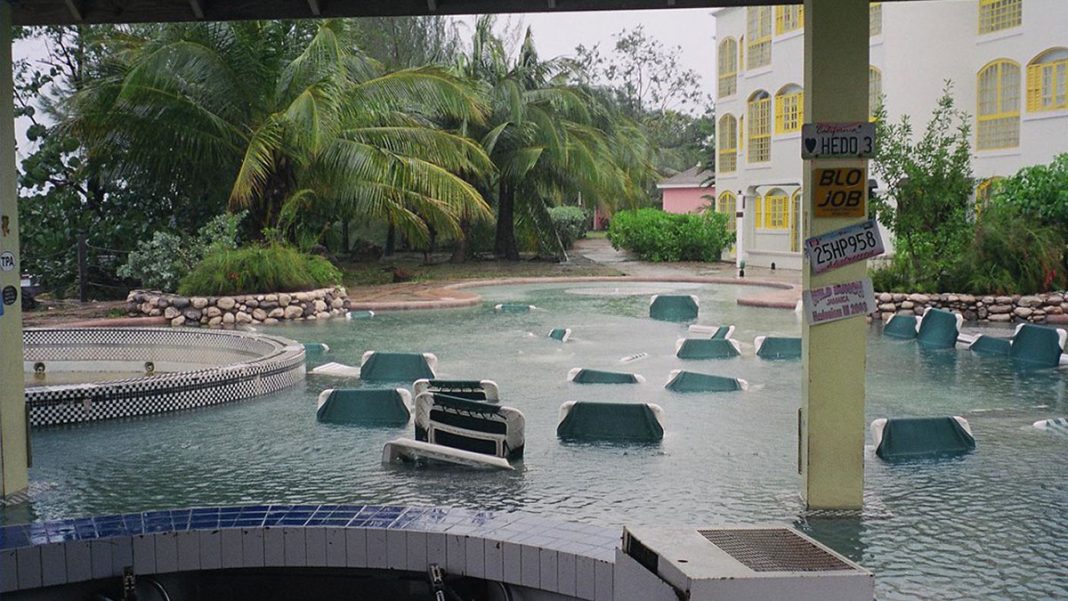
Jamaica! Jamaica!
Its national motto, “Out of many, one people,” reflects the diverse cultural and historical roots that make up the island’s identity. Known as the “One Love” capital of the Caribbean, Jamaicans are often portrayed in extremes: either as warm, smiling, generous people or as ruthless, dangerous killers. Yet this small island has produced giants: Bob Marley, Marcus Mosiah Garvey and countless freedom fighters who led rebellions against enslavement and built thriving Maroon communities in defiance of colonial rule. Jamaica, like much of the Caribbean, stands as a shining example of resilience and fortitude.
But it also bears the festering wounds of exploitation. Like many of its neighbors, Jamaica is marked by economic dependency, rampant poverty and crumbling infrastructure that turns natural disasters into human catastrophes. Instead of serving as a model of self-reliance, the island remains trapped in the geopolitical backdraft of U.S. imperialism, treated like a modern plantation whose tourism-dependent economy enriches the petit bourgeoisie and the colonial ruling class while leaving the majority to struggle.
So when warnings came that a Category 5 hurricane was about to devastate the island, the government moved first to protect its economic interests, not its people. This is a stark contrast to neighboring Cuba, which regards its citizens, not investors, as its most valuable natural resource.
When disaster reveals the system beneath
In Jamaica, the government opened hundreds of shelters and issued evacuation orders, but support stopped at advisories; fewer than a thousand people sought refuge, and for many, especially in rural parishes like St. Elizabeth, evacuation depended on private means rather than state coordination.
In Cuba, by contrast, the socialist state mobilized its entire Defensa Civil system, relocating more than six hundred thousand people using organized transport, pre-stocked shelters, and neighborhood committees; property was lost, but lives were spared. Cuba’s model treats protection of life as a collective duty, while Jamaica’s framework leaves survival to individuals.
So, when the floodwaters of Hurricane Melissa surged through the farms and coastal villages of St. Elizabeth Parish, the images told a story far larger than broken roofs and drowned crops. The storm ripped open the fault lines of Jamaica’s economy and politics, exposing a colonial legacy where the poor bear the burden while the ruling class make off with the loot.
The prime minister and U.S. imperialism
Jamaica’s Prime Minister, Andrew Holness, arrived at the disaster sites with military escorts and foreign consultants. His government has pledged billions in “resilient infrastructure.” Yet critics say those funds and promises will funnel into the same exploitative contractor, tourism and debt machine that shaped Jamaica’s economy for decades.
Holness has long aligned Jamaica with U.S. regional security and economic agenda. Earlier this year he endorsed U.S. intervention in Haiti and publicly signed bilateral agreements on policing, climate-resilience and U.S.-led trade frameworks. In effect, Jamaica has been signaled as a “reliable partner” in the Caribbean, one that hosts U.S. bases, participates in the U.S.’s Caribbean Basin Initiative, and adopts an economic model that deepens the colonial dependency on the U.S.
The rebuild is being packaged as a U.S.-led “resilient tourism” and “reconstruction” project. Sources from the U.S. have pledged aid and “technical support,” but those come with strings: open-markets, binding public-private partnerships, and foreign company dominance.
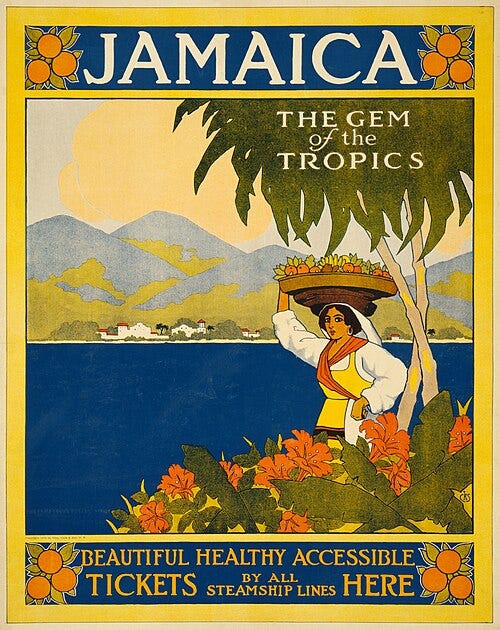
Aid, strings and the plan to rebuild
The headlines celebrate “emergency aid,” but in her book “Dead Aid,” author Dambisa Moyo says, “the problem is that aid is not benign – it’s malignant.”
The United States has pledged roughly $24 million in emergency funding for Caribbean nations hit by Hurricane Melissa, with a large share directed toward Jamaica. The European Union has given €5 million through its Civil Protection Mechanism, while the United Kingdom added another £2.5 million in relief and logistical support.
None of this assistance is politically neutral. As Jamaican economist Basil Wilson has observed, “aid is not charity—it is strategy; it writes the ledger of who pays and who governs.” Each pledge reflects a contest for influence in the Caribbean, a tug-of-war between imperialist nations over whose firms will rebuild the island and whose currency will shape its future.
Even ordinary Jamaicans recognize the game: one IG commentator summarized it succinctly, “The hurricane is the excuse. The rebuild is a strategy to push China out of Jamaica,” echoing U.S. President Donald Trump’s rhetoric regarding combatting Chinese interests in the region.
The Manley legacy and the debt trap
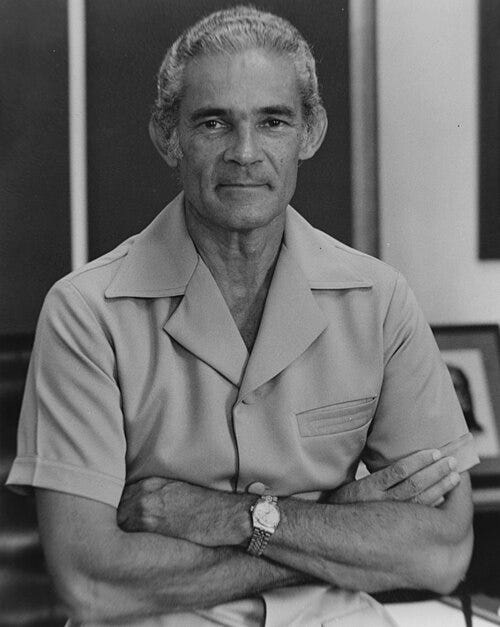
To understand Jamaica’s economic history, we must understand that Jamaica once tried a different path. In the 1970s, under the leadership of Michael Manley, the island pursued expansive social programs, nationalized industries and deepened South–South ties with Cuba and the Global South.
But a mix of capital flight, high oil prices and IMF conditions pulled Jamaica back into the standard debt-driven black hole: devaluation, privatization, wage suppression and tourism-led economy.
As Carolyn Cooper has pointed out in her work on culture and capitalism, “Tourism in Jamaica functions like plantation labour for the global North, outsiders visit and leave locals singing, sweeping, cooking; the bulk of value departs with the visitor.” That structure has now been laid bare by Melissa’s aftermath. It’s the same economic skeleton, more exposed, more vulnerable.
What’s next for Jamaica?
The people of Jamaica have always been resilient. From the Maroons who fought British colonialism to the working-class women and men who built the island through crisis after crisis, they will once again dig their hands into the soil, repair their homes, and find a way to live. But resilience alone is not liberation.
The lesson of Hurricane Melissa, and of Cuba’s example, is that survival without organization keeps the people vulnerable while power remains in the hands of those who profit from disaster.
Jamaicans must make a choice: either continue to endure and rebuild within a system designed to fail them, or organize to protect themselves and to create a new Jamaica altogether.
That means community defense and self-organization in times of disaster, and political organization to overthrow the parasitic economy that bleeds the island dry. It means rejecting dependency and joining the growing bloc of nations in the Americas that are standing up to imperialism, reclaiming their sovereignty and building a new world rooted in liberation.
To move forward, Jamaica must adopt an unapologetically anti-colonial perspective, one that treats its people as its greatest resource, not as cheap labor or collateral for loans. When an economy is built around the needs and creative power of its people, every other form of development (economic, political, and cultural) begins to align with human progress.
A Jamaica that values life over profit and freedom over servitude, can rise from the wreckage of Melissa. The question is not whether Jamaicans can rebuild, but whether they will build a nation worthy of their resilience.
Build the African Socialist International!
Power to the African working class!


