

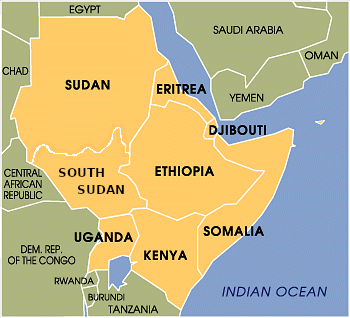
This is a message to the Four Way Consultative Summit that took place in New Alamein (El-Alamein), Egypt, on October 4, 2026 from the African Socialist International (ASI) Africa Regional Director of the Organization, Tafarie Mugeri.
JOHANNESBURG–The political developments that have taken place in the past four years across the Sahel have captured everyone’s attention. Despite the bitter history the region has with military coups, many Africans have welcomed the takeover by Capt Ibrahim Traore, Gen. Assimi Goïta, and Gen. Abdourahamane Tiani.
The troika has proved itself to be about much more than the grip to power and eliminating rivals. They have made some major progressive moves that have materialized into concrete developments across the three states. We are now looking at an amalgamation of formerly weak states to build a formidable force that can fend off imperialism and its minions. Therefore, if the comrades in the Sahel could do it, why can’t heads of states in the Horn of Africa do the same?
Historical basis for regional unity in the Horn of Africa
Eritrea and Ethiopia could’ve effectively been a single country with a centralized government. However, the Europeans wouldn’t allow that. Italy was particularly interested in fragmenting the so-called horn of Africa for as long as they didn’t have complete control over it. The only way that region was going to be unified was under Italian rule, which didn’t happen since we bravely defeated the invaders at Adwa on March 1, 1896.
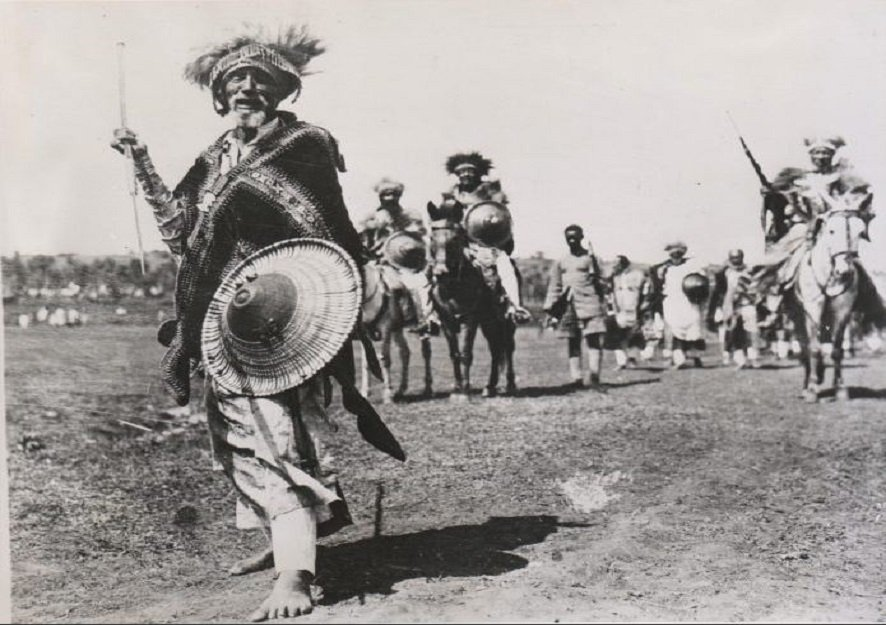
Immediately after the Battle of Adwa, Emperor Menelik II moved to the southern territories and incorporated them into the Ethiopian Empire. Whether this was done with consent or forcefully is another question. However, this expansion cannot be equated to colonization and what the Europeans did to us. Menelik made a move that was necessitated by the aggression that the whole of Africa was confronted with. Territory and population numbers are important in warfare and sovereignty.
Ethiopia and Eritrea are not enemies, imperialism is.
In the same vein, to suggest that Ethiopia intended to colonize Eritrea is an oversimplification of the matter, and disingenuous to say the least. In Southern Africa, where Europeans also suffered an embarrassing defeat from African warriors at what is known as the battle of Isandlwana, there is Shaka Zulu who is lauded for uniting the Nguni nation. Shaka Zulu, just like Menelik, used military and diplomatic means to unify the isolated communities in order to build a formidable force against the invading Europeans. That is our history that we have to acknowledge without prejudice, even though different approaches may be required today.
The isolation of Ethiopia will only serve the interests of Europe and other enemies of Africa. Through Asmara, Europeans and other foreign powers can ensure that they maintain control of the Red Sea, and prevent any activities that do not serve their selfish interests. Africa needs to establish a level of sovereignty on its waters, and this can only happen if we are united. Instead of escalating violent conflicts in the region, the Summit in New Alamein must have ensured that everyone finds common interests and win all contending forces to a single vision. And that vision should not exclude Ethiopia, as this summit has already done.
Eritrea will never be a viable state when isolated from Ethiopia. And this is not to suggest that any state in Africa is viable, as they are all colonial and divisive amongst Africans. At the Battle of Adwa, many of the forces who were on the Italian side were Eritrean askaris serving foreign interests. This was despite the fact that the Eritreans shared a common history with the rest of Ethiopia, particularly the Tigrean region. This explains why the Tigray Pepople’s Liberation Front (TPLF) is alleged to be sponsored by Eritrea in its military activities within Ethiopia.
Ethiopia, just like the Alliance of Sahel States is landlocked. As far as trade, commerce and security are concerned, access to the sea is extremely invaluable. This explains why Italy had control of Somalia and Eritrea, the two territories that buffered the Red Sea from Ethiopia in order to safeguard European colonial interests. Now that all those countries have supposedly achieved independence, you would expect them to dismantle all the colonial barriers created through the borders. Unfortunately we are only independent on paper, not in reality.
The 1952 federation commissioned by the United Nations was bound to fail. Unless we facilitate the unification process ourselves and not through the hand of imperialism we can never succeed. Imperialism seeks to consolidate its own interests, even when they pretend to advocate for unity amongst Africans. We saw this through Cecil John Rhodes who sought to build a railway from Cape to Cairo for the colonial expansion of the British empire. Decades later, the same Britain sabotaged Kwame Nkrumah and aided his removal in order to destroy his momentum for the United States of Africa that would require our own effort and independence.
Forward ever – backwards never!
In 2019 Abiy Ahmed Ali, Ethiopia’s Prime Minister received the Nobel Peace prize after signing the declaration of peace and friendship agreement with Eritrea. Eight years later, ten Eritrean diplomats have been expelled from Ethiopia, and in retaliation, the Eritrean government decides to sever all diplomatic ties with its neighbour. Why couldn’t these two governments use the peace agreement to build a closer union but instead allowed things to deteriorate to this point?
We understand that the dynamics between the Sahel and Horn are not exactly the same. They are far from being identical, and we are aware of that. Neither are we suggesting that the comrades in the Sahel have gotten everything right. However, their desire and efforts to consolidate the territories and resolution on imperialism being the primary contradiction is profound.
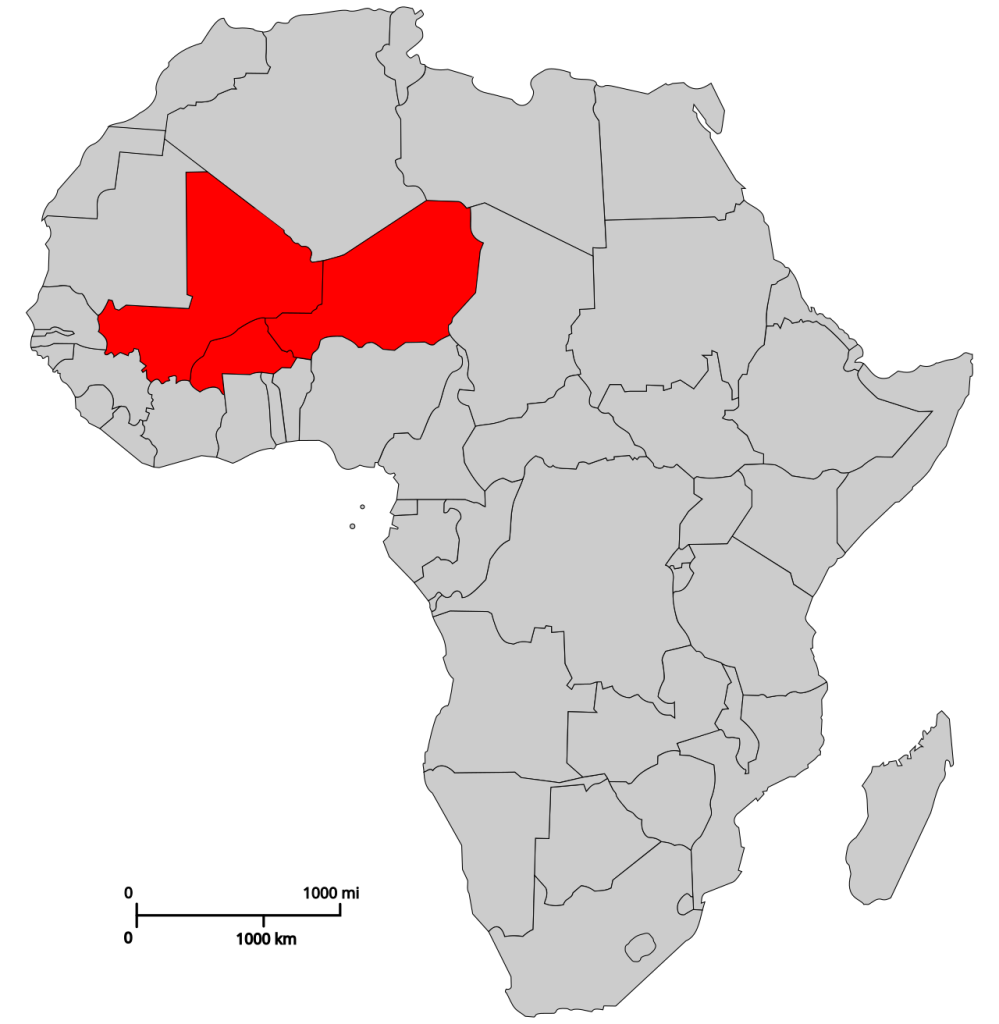
Through their Alliance of the Sahel States (AES), Burkina Faso, Mali and Niger have taken the anti-colonial posture. The same approach should be evident coming out of this New Almenia summit. The AES has made progressive moves in the direction of collective regional sovereignty, military defences (without French colonial interference), economic independence and cooperation. Collectively, they are working on a single regional passport, as well as a joint investment bank that can solidify trade and industrial development in the region.
On the other hand, Egypt has just declared the Ethiopian Ambassador persona non grata after the latter expelled its senior diplomat. Not long ago, the two countries, including Sudan, were at loggerheads over the control and function of the Grand Ethiopian Renaissance Dam. The Nile River gave us some of the earliest civilizations in the history of humanity. Today, the Sudanese and Ethiopian governments are accusing one another of supporting paramilitary groups to sabotage the other.
We can only hope that the so-called Four Way Summit hosted by Egypt can resolve these conflicts and engender commitments that center the interests of the people at the expense of those who seek to divide us.
Our message as the African People’s Socialist Party to the governments of Egypt, Sudan, Eritrea and Somalia is that they should remember Africa, and understand that imperialism is confronted with its painful demise. The governments must decide if they are with the people, or against the people.
We also want to urge the Ethiopian government to not move so desperately. The question of Somaliland, and allegations related to the UAE and Rapid Support Forces in Sudan must be attended to with principle, while avoiding opportunism. Alliances with Israel must be discouraged, as we are all aware of the Zionists agenda for expansion and influence at the expense of all indigenous people. For more than a century, Ethiopia has had to fight many wars with the quest to expand its capacity as a regional power. However, all of that will always happen at the expense of regional peace and stability, until they shift the objective to a cohesive, united African state.
With everything said, whether regional integration will take place in the Horn of Africa will depend on the masses of African people there in particular. When we consider the fact that those in power may not have the desire to sacrifice their positions for the greater cause of African unity and independence, the masses will have to discover their own selfish interests. Without a doubt, the material interests of the people in Ethiopia are the same as those of the masses in Egypt, Somalia, Sudan and Eritrea. Therefore, the governments of these countries cannot decide our fate, our material interests should do so.
As stated by Chairman Omali Yeshitela in his book titled “Vanguard,” “Africans can be united globally once again under a single leadership with a single center. Like Garvey, we know that a liberated and united Africa can only occur under a single revolutionary organizational leadership.” Therefore, all heads of state who claim to be serving the interests of the masses of African people must move towards that direction of unity.
Independence, unification and socialism in our lifetime!
Uhuru!


