

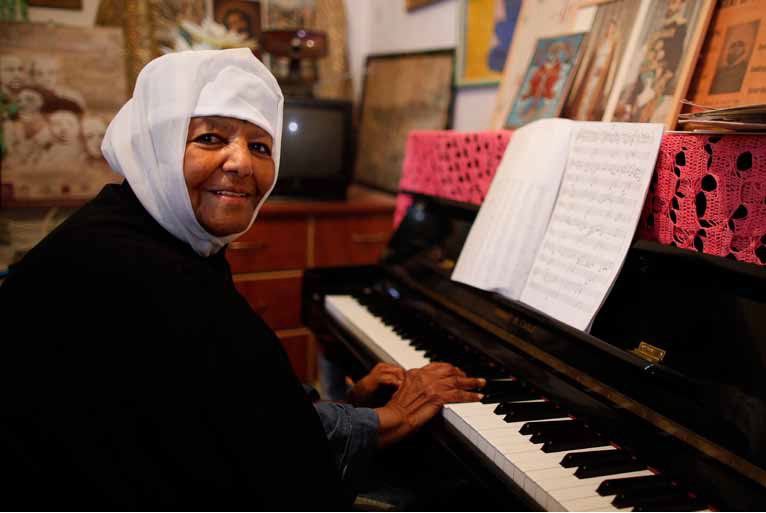
Emahoy Tsegue Mariam and her “Souvenirs”
Labeling her the “Mother of Ethiopian Classical Music,”—as grand as that epithet sounds—might still be doing Emahoy Tsegue Mariam Gebru and her haunting and ethereal compositions a disservice. She was born Yewubdar Gebru in 1923 Ethiopia, and by the age of six, went to Switzerland to study music.
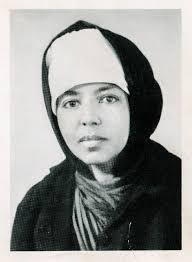
Such prestigious educational journeys were not common among the Ethiopian public in the early 20th century. Emahoy Tesgue’s family was of the aristocratic stock that could afford just that, as the daughter of Gebru Desta, mayor of Gondar.
Though Emahoy Tsegue demonstrated musical precociousness as a child, her studies were interrupted by the Second Imperialist War. She felt her true calling was in the service of her people, country and god through the Orthodox Church.
She joined the convent in 1944 but never quite gave up music. Within the Church, she earned her “Emahoy” title and continued with music through both piano and the violin—and occasionally performed for Emperor Haile Selassie I.
Emahoy Tsegue Mariam’s compositions defied categorization. It has been described as a meld of European classical music, but with the Ethiopian pentatonic scale—not quite jazz, nor was it ragtime. Her compositions broke traditional musical conventions with no set tempo in any given song—slowing down or speeding up as the song calls for it, a marker of unique talent.
She’d switch between tempos (or beats per minute) and laymen would be none the wiser. Not only was Emahoy a musical outlier in the realm of classical music, she was also distinct from the pioneers of Ethio-Jazz, the more prominent musical genre of the era.
Her “Souvenirs” album, recorded during the late ‘70s and mid ‘80s, and reissued last year, contains some of her most poignant and patriotic songs. In this album, Emahoy not only graces us with her quick-fingered, tempo-defying piano but her pleading and ethereal voice as well.
Much like the ambiance of a turntable, when playing the first track, one hears the humming background before hearing her voice in “Clouds Moving on the Sky,” the first track in “Souvenirs.” (Though this can be because of the rudimentary recording equipment, it feels like one is in the room with her—especially with headphones in.)
Here, in exile, she longs for home. She sings, “Oh you bird in the sky, have you any news?/Are you back from my beloved country?”
Her third track, “Is it Sunny or Cloudy in the Land You Live,” continues this theme, celebrating Ethiopia and the Blue Nile (Abay): “Are there skies once you’ve crossed Abay (the Blue Nile)?/ Or is there any other like Ethiopia?”
No stranger to war or political strife, Emahoy Tsegue Mariam lived through some of the most turbulent periods in Ethiopian history. These moments permeated the music she composed and the lyrics she wrote. Though her music was not explicitly for one political movement or another, her love of her country and her people shone through.
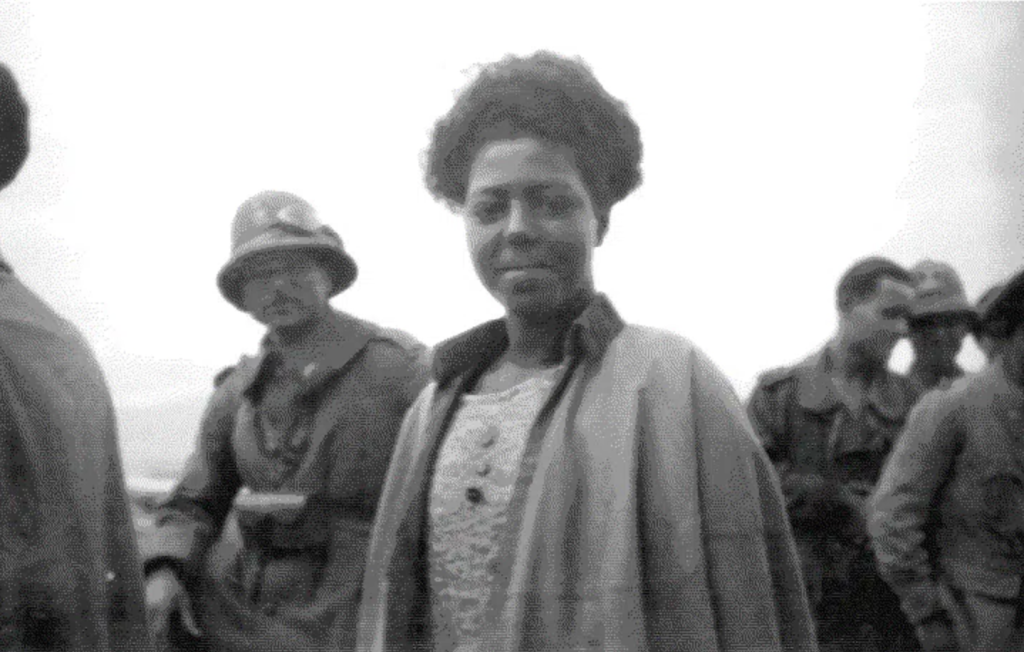
In the mid to late ‘30s, she and her family were prisoners of war during the Second Italo-Ethiopian War. She lived through both the peaceful and repressive eras of Haile Selassie’s reign, as well as the 1974 Revolution that established another repressive government of the Marxist-Leninist persuasion with Mengistu Haile Mariam and his Derg regime—not to mention the chronic famines the Ethiopian peasantry was systematically subjected to.
In “Ethiopia My Motherland,” she starts, “Ethiopia my motherland, no one will dare conquer you”, and greets civil servants, teachers, soldiers, and recognizes them for their service to country: “Peace to you, fellow teacher, countryman/You who fight for all to learn.”
She bids those who leave their country for education not to forget their home: “You who went overseas for school/Don’t forget your duty to your country.”
In many ways, this becomes a timeless call to all Africans now living overseas for valid and varied reasons, to do whatever in their power to be of revolutionary service to the Motherland.
Emahoy’s discography, particularly “Souvenirs,” brings salient questions to the fore to Africans in Ethiopia today.
What is patriotism when countrymen slaughter each other with reckless disregard for the sanctity of life? What does service mean when colonial logics ravage our continent through the mechanisms of neocolonialism or imperialism–simply, the power of the colonizing world governing and exploiting Our Africa?
We, like Emahoy Tsegue Mariam, are living through another moment in Ethiopian history where it feels like all is lost, like we are losing sight of what it means to be neighbors, to care for a fellow African.
But Emahoy’s Ethiopia is our Ethiopia. If we care to embody the music she gave us, we should be loving our people, serving our people, and challenging every iteration of neocolonial rule that makes suffering a quotidian of life in Ethiopia.
The failed 1960 coup, the ensuing radical Ethiopian Student Movement, and the impending 1974 Revolution were moments of rupture that evoked profound existential questions among Ethiopians–just like today’s violences pose the same questions to us today, both at home and abroad.
Like Maimire Mennasemay points out in his brilliant work, “Qiné Hermeneutics and Ethiopian Critical Theory:
“The liberation of both the individual and collective kind of liberation comes partly with not just hearing but earnestly listening to one another and fostering and organizing anticolonial political unity in every pocket of our communities.”
For that is where Ethiopia is—in the way we treat, speak to each other every day, and in our relentless work in uniting all Africans. For if that remains, then the dream, and ensuing reality, of a truly united Ethiopia surely lives. The kind that speaks to power Emahoy Tsegue’s promise: “Oh Ethiopia my motherland, no one will dare conquer you/For your borders are defended by your brave children.”


