

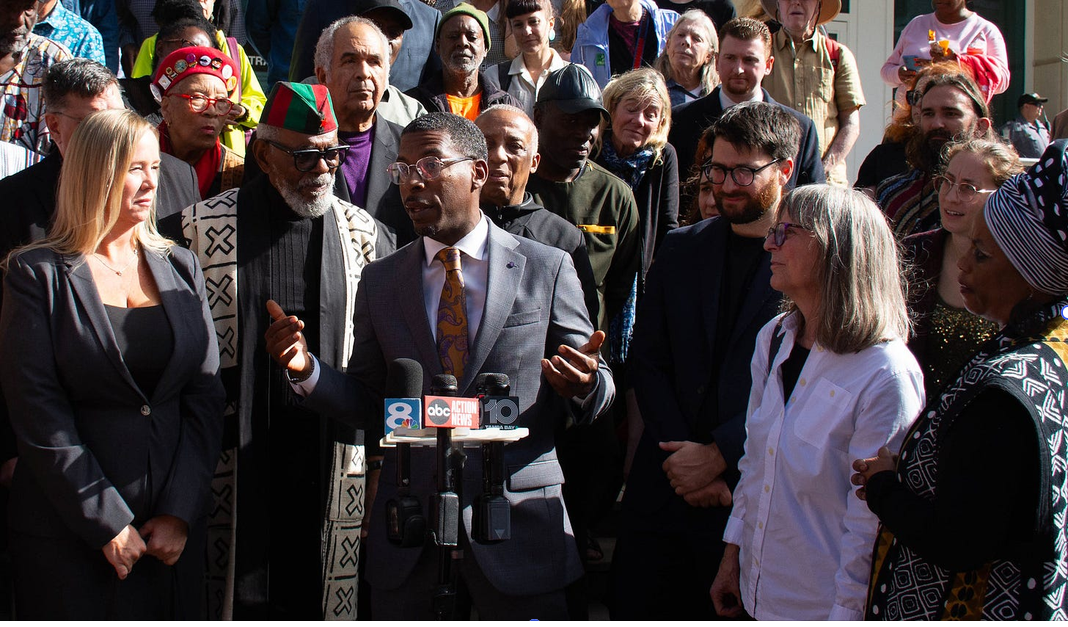
This is a condensed transcription of Mutaqee Akbar’s presentation at the debrief following the Uhuru 3’s oral argument on July 22, 2026 in Atlanta. The live stream of the day’s events is available at The Burning Spear TV YouTube channel.
Uhuru!
It’s an honor and privilege to be here as a part of this legal team and to represent the co-defendants in this case. The summation of what happened has already taken place. I just want to bring perspective of what this is. There’s a thing called precedence in law that we work with, and when you think about precedence, sometimes the courts get things wrong.
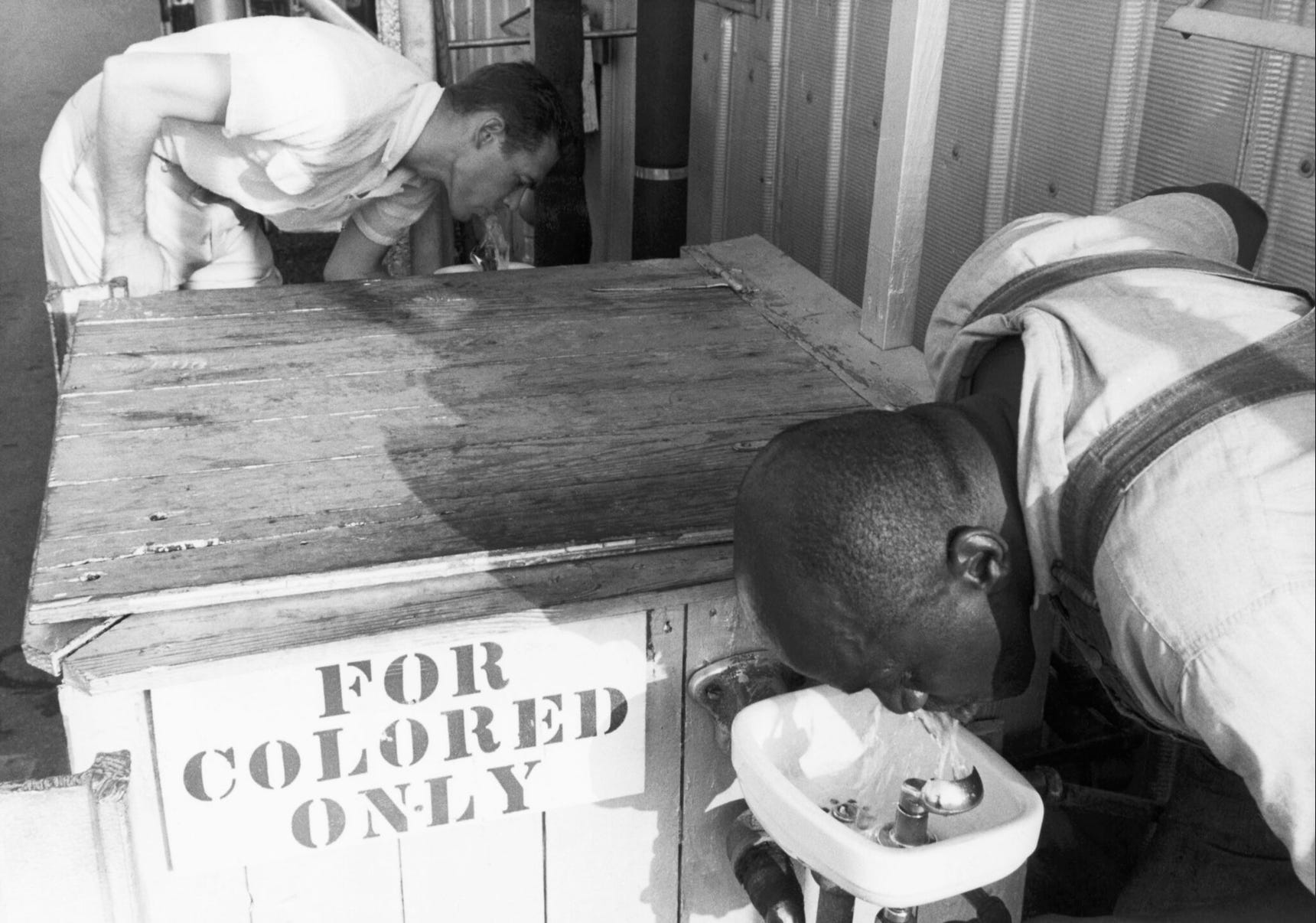
When you think about this guy named Homer Plessy, back in 1896, [he] was recruited by a civil rights group to get on a train and sit in a cart amongst the white passengers. He was taken off the train, he was arrested and it went all the way up to the Supreme Court.
[The civil rights group, and the general pubic], thought for sure when it went up to the Supreme Court that the courts would determine that his arrest, or them keeping him out of that white cart, would get overturned–that [the Supreme Court] would say “this is wrong, black people and white people should sit in the same cart.”
But the Supreme Court of the United States said that there was nothing wrong with Plessy being arrested, nor charged, for sitting in that cart. So the precedence that was set at that point in Plessy v Ferguson, back in 1896, was separate but equal [as] the law. And it wasn’t until 58 years later, in [the court case known as] Brown v Board of Education when that law was overturned.
It took 58 years for the Supreme Court to determine or to decide that black people and white people can sit in the same train cart, which led to sitting in the same schools and that led to desegregating schools. Even if this court gets it wrong today, that doesn’t mean that [the decision] is right. That doesn’t mean that [the decision] should be the law. That just means that [the Supreme Court is] wrong. So all the points that Attorney Leonard Goodman was bringing up at the Court of Appeals today–saying that you all were targeted [the Uhuru 3]–was because of what they were saying. That’s clear!
The indictment said, “We don’t like the fact that they were spreading Russian propaganda or disinformation and sowing discord.” But the same doesn’t apply when people talk about or advocate on behalf of Israel–think about AIPAC (the American Israel Public Affairs Committee),
[The U.S.] doesn’t say the same thing when people advocate on behalf of other European nations that go along with what the United States says–that goes along with colonialism and all those things.
It’s only when you speak against what this government thinks you shouldn’t speak against. So [the court] might get it wrong in order to uphold this power, in order to uphold the colonialism, in order to uphold the fact that [the State] needs to tell you all, [Africans and colonized peoples, as well as those in solidarity with Africans and colonized peoples], what to do, how to act, and how to function.
The fact that it’s not right means that we have to keep fighting. And I think the idea of “if we lose here, we go to the Supreme Court” is almost an analogy of “the fight continues.” The struggle continues all the way up. Again, even if the Supreme Court gets it wrong, that doesn’t mean that they’re right.
One of the quotes…that led me to [becoming a lawyer] was Charles Hamilton Houston’s. He was dean at Howard Law School who said, “A lawyer’s either a social engineer or a parasite on society. A social engineer is a highly skilled, perceptive, sensitive lawyer who understands the constitution of the United States and knows how to explore its uses in the solving of problems of local communities and in bettering conditions of the underprivileged citizens.”
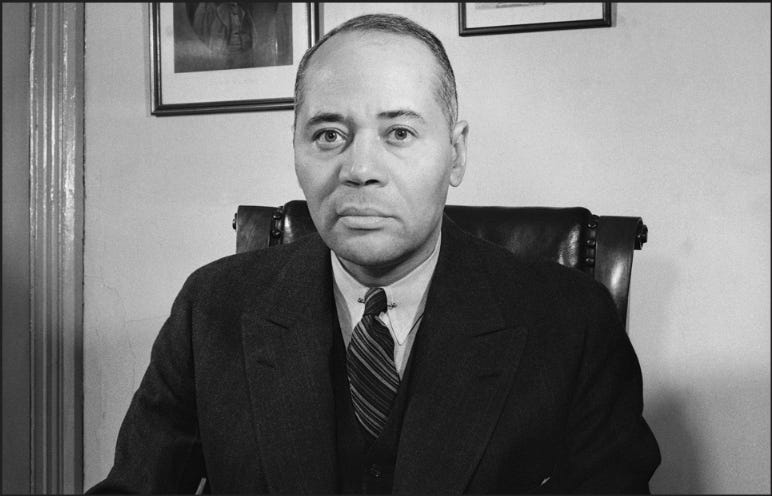
When I heard that [in] my first year in law school, [it] set the path of what my career was going to be as a lawyer. Because as the Chairman [Omali Yeshitela] said, the seed was planted when I was born. My dad, my mom and my grandparents were in the Nation of Islam. The idea of nationalism, the idea of understanding who you are and independence was the seed that was planted. But the work that we do, not only as lawyers, but as the Uhuru [Movement]…all of us who understand who we are, we have to be social engineers!
We have to continue the fight that we talked about. We have to resist this idea that you have to just fall in line. We have to resist this idea that we can only hold the government to what they’re supposed to be doing–which is important. but I also don’t believe in, just like this organization [the Uhuru Movement], we don’t believe in waiting on the government to do what we could do for ourselves either.
So that social engineering also includes organizing ourselves. That social engineering also includes building our own schools. That social engineering also includes creating communities and building communities, and having the doulas in our communities, and going into places like North St. Louis and creating our own community basketball courts and gardens and all of those things. All of that is social engineering. But you’ve got to understand with that social engineering, you become a target.
We’ve been saying from the very beginning that it wasn’t the conversations with Russia, or with the Russians that landed the Uhuru 3 where the Uhuru 3 was. It wasn’t! Don’t be fooled!
It wasn’t those conversations that landed them in federal court. It wasn’t those conversations that led us to where we are today–it was the work. It’s the self-determination, that’s the scary part.
It wasn’t the conversation with the Russians. It was the fact that this group, [the Uhuru Movement], have the nerve. They have the nerve to not only say what they want to say, to not only have that independence, but to also build on all of those things. They are not just talking about “we got to build community like a lot of these organizations do.
They are actually building a community. They have stores, they have bakeries, they have gardens, they have nursery schools, they have all of these things. [The State] can’t criminalize that. So, [the State] is going to find something to criminalize.
We got to understand that doing that work is necessary. And the fact [is] you become a criminal for doing that work, because there are so many people who say certain things but they’re not building on it. So, that’s what got [the Uhuru 3] into federal court. That’s what got us where we are now.
Again, this idea that we’re going to keep on going to the Supreme Court is the same idea that we’re going to keep on fighting. We [are] going to keep on going, and we can’t stop.
[I got on this case] by representing protesters. People come to Tallahassee all the time, and they protest. They fight against the craziness that we have going on in Florida. They call me and they say, “Hey, this is about to happen.” And I represent them!
And so I ended up on this list of conscious lawyers, some kind of way.
That’s how I got referred over to represent this case [for the Uhuru 3]. When I first got the call, and I’ve said this before, I thought it was spam. The communication said “Russians” and “investigation,” I ignored the email probably three or four times, before they [finally] got me on the phone to say: “Look, do you want to participate in this case?”
I started looking into it, and of course I knew who the Chairman was since I was a kid. So that excited me! And then I started looking into the case and I talked to my family about it. They were like, “Uh, I don’t know about this one…. I don’t want you, with a name like yours, to get connected to something that you don’t need to be connected to. I don’t want you to end up on some list somewhere out there.”
[Then], I talked to my law partner. My law partner was like, “I don’t know about this one.” So I had to go do some thinking for myself. And that’s when that quote came back to mind. If I got my [law] degree for anything, it would be for something like this. It would be to fight for something like this, and to be a part of something like this.
In terms of fighting this case, the arguments that we made, what we talked about–I started off with saying ‘Uhuru’ means freedom.
We had a lot of meetings. This is probably the most client/attorney meetings that I’ve ever had; and we had a few disagreements in those meetings. One of the disagreements between the lawyers and the clients was how much are we going to push who the [Uhuru 3] are, who the African People’s Socialist Party is.
And honestly, like the lawyers were saying, “We probably should water it down a little bit.” And of course, y’all know the Chairman was like, “No, we’re not.”
[And I agreed], Yeah. No, no we’re not.
We had our own lawyer conversations, like how are we going to convince them to water it down?
Eventually, leading up to the trial, we were trying to figure out [how] we’re going to water it down. [But] leading up to the trial, something happened. I don’t know what happened for all of us, [but] by opening statement: We said we’re just going to tell it like it is.
And we’re not going to run from who these people are. We’re not going to run from the work that they’re doing. And honestly, I believe that won the case. I believe the fact that we were able to, as the attorneys argue from the voice of the Chairman, speak from the voice of Penny Hess, speak from the voice of Jesse Nevel, [was] to show the work that they’re doing.
And in the closing [arguments], all of us kept that up, and one of the things that I did in the closing: because during the trial, and I think the government probably regrets playing this one video, this one video that they played like during the bus tour, and the video took place in Chicago, I believe: there was a group of sisters in a huddle and they were talking to a sister that just so happened to be walking down the street.
They were talking to the sister, and they were telling her, this is the work that we do. We’re doing this in St. Louis. This is why we’re here. We’ve been intense. We want to spread this message of reparations. We want to spread this message of what’s going on in this country. And the sister that they were talking to was almost in tears. And she was saying, “I have no idea that an organization like you all does this kind of work. I had no idea that this organization has been around. Like y’all really have like changed my perspective. Y’all really made my day. Like, what can I do to get involved?”
And we took that clip, and ended our closing argument with that clip, only to say: “This is why they, [the Uhuru 3], are here.” This is what the government is afraid of. This is what the government doesn’t want to spread throughout this country.
And so no matter what happens after today, whether you’re a member of the African People’s Socialist Party, whether you are a member of the solidarity movement, whether you’re a member of the NAACP, whether you’re a member of your neighborhood association, I don’t care what it is…understand what we’re fighting against and understand what, and who we’re fighting for.
It’s FREEDOM!


