

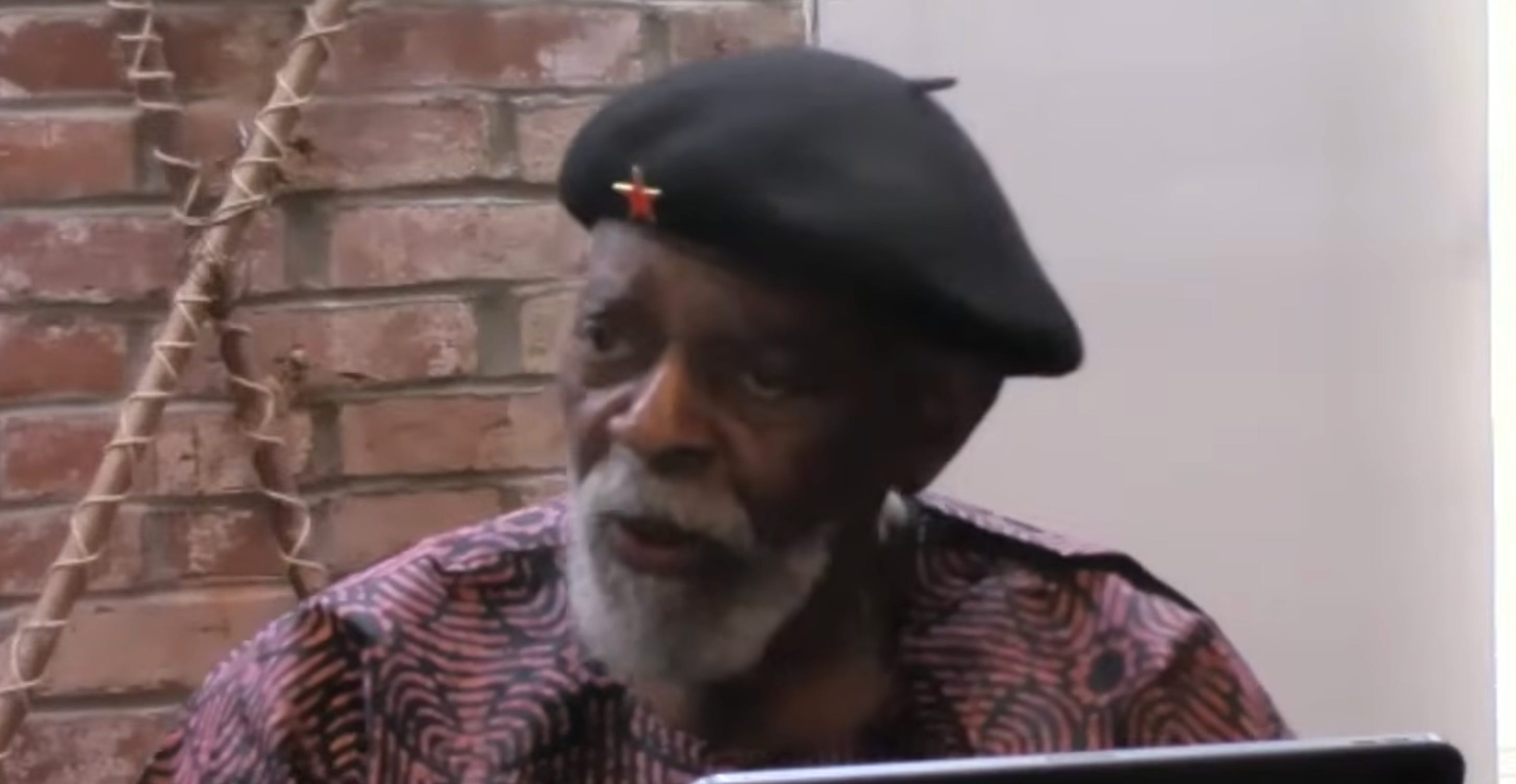
The following is a condensed transcript of Chairman Omali Yeshitela’s statement made on a Hands off Uhuru! Hands Off Africa! Webinar broadcast on Saturday, March 21 on The Burning Spear TV YouTube channel.
Uhuru, I want to express my appreciation to you, Comrade Chairwoman Mwezi, to Comrade Penny Hess, the Vice Chair, to everyone who is participating in this very important webinar that we are involved in today.
I want to give a special shout of appreciation to Comrade Jesus, who is there on the front lines [in Venezuela], and that’s obviously very different from people who are simply expressing opposition and perhaps organizing protests in someplace around the world. To be there, to anticipate as the people of Venezuela were anticipating for so many months, the attack that did occur finally on January 23rd, that kidnapped the president of Venezuela.
And I want to also express appreciation to the Comrades Penny Hess and Jesse Nevel who were part of the Uhuru 3. And to First Combatant Comrade Ona Zene Yeshitela, whose work on the ground in St. Louis, in particular, but other places and otherwise throughout our Party, contributed to the conclusion that the US government came to, that they had to attack us.
Just as they attacked Venezuela, just as they attacked Palestine, just as they attacked various other forces, Iran fighting for liberation and initially trying to do the same thing in terms of decapitating our movement, with an attack on my home, that I share with comrade Ona Zene Yeshitela. [And attacks] on comrades Penny Hess and Jesse Nevel who provide leadership for the solidarity component of our organization. And so this is something that we are quite familiar with.
I want to remind everyone. That all of us are under attack. This is something we hear stated in various ways up to now in this process [of the webinar]. But I want to say a few other things about that.
First of all, Uhuru means freedom. When we say Uhuru, it’s not simply a literal translation of a Swahili word. Uhuru means freedom in resistance. Freedom through resistance. The way the world came to know Uhuru was not simply a translation of a Swahili word. It was by the Kenyan Land and Freedom Army that went up against the British empire in the 1940s and 50s and held the British empire at bay for a long period of time. Where England killed at least 200,000 African people in Kenya. That also made a strategic blow to the colonial mode of production, so that whatever they had planned for British held territories, they could not do it in the same way because they had to anticipate the kind of resistance and the inspiration that was given to Africa as a consequence of the Kenyan Land and Freedom Army or Mau Mau.
Patrice Lumumba used the term Uhuru. Our Party and movement used the term Uhuru. Malcolm X talked about Uhuru. Asata Shakur, when she was freed, the first word in the statement that she made after having been freed was Uhuru.
It’s not just an interpretation of a Swahili word. It is freedom through resistance. Freedom as resistance [to] the colonial system that we are dealing with.
It is very important to make that point. We are having this discussion today in part because of the success of the anti-colonial independence movements. Before the success of the anti-colonial independence movements, the struggle for independence for freedom against colonialism, was not something primarily being done by heads of states. Generally speaking, of course with exceptions, Cuba and Algeria, and there were other places. Masses of people around the world were involved in [the] struggle against colonialism.
We talkin’ about in the 1950s even, where a major event was held in Indonesia to develop an anti-colonial movement. Malcolm X spoke about that. And he talked about [how] the white man was not invited. Could not attend. This was just for the colonized peoples of the world. This was in the 1950s.
Then, of course, in the 1960s, right there in Cuba we saw OSPAAAL formed. That is the Organization of Solidarity with the People of Asia, Africa and Latin America. This was an anti-colonial movement that recognized the universality of the struggle that we were involved in.
This was the struggle that we were making to remove ourselves from this situation of seeing every incident, every separate struggle as a single incident, a single struggle, not being able to recognize that we were dealing with a whole system.
And part of that is that most of the progressives we know have come to understand some things like the modes of production. And Karl Marx played a really important role in helping to understand that. And from Karl Marx’s understanding we came to recognize that capitalism was a mode of production. There are several modes of production, each coming into existence in some sort of stairstep fashion as a consequence of the contradictions that emerged in the previous mode of production.
And so what we have come to understand is that feudalism was a mode of production, out of which grew capitalism as another mode of production. But that was the European base that we were talking about. Because feudalism was a mode of production in Europe, primarily. I’m not saying that there were no other places in the world that had features of what we know as feudalism; but I’m sayin’ the feudalism that we had talked about, where we make our definitions come from.
Out of this feudalism in Europe we see the emergence of another mode of production, called capitalism. But to get to capitalism we saw that it was necessary for Marx to answer the question, how the hell do you have a capitalist, how do you get capitalist production out of feudalism? How does that come about?
And what he indicated, for this to come about [was] primitive accumulation.
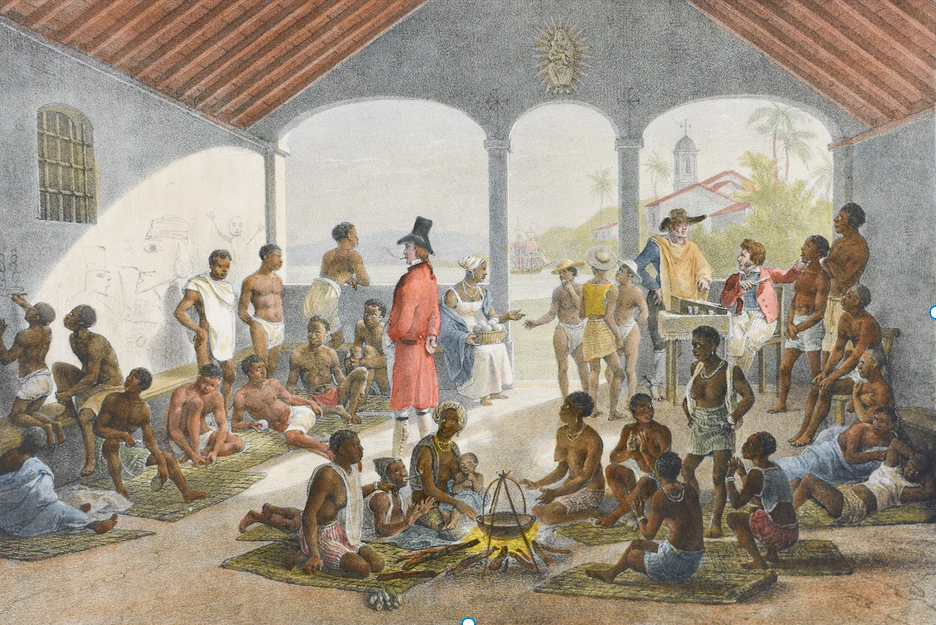
He said it came about as a consequence of enslaving, turning Africa into a warren for the commercial hunting of slaves. He said it came about as interning indigenous people in the Americas into the mines bringing up gold and silver for the Americas.
It came about as a consequence of the attack that was characterized as East India at the time. And bringing all kinds of resources. Killing millions of people in the process. There are whole peoples who do not exist anymore as a consequence of that.
And the fact is that a third of the African population was killed as a part of that process. It was estimated 600 million black people on the face of the Earth were in Africa, when this attack happened. And as a consequence of what they did to us and continue to do to us, they killed something like 200 million African people. This is how this whole process came into existence.
It’s important for us to understand this, as we try to bring as much [science] as we can, into this discussion. And science does not necessarily mean that you come up with readily made kinds of slogans, [or] solutions that can fit the slogans, or whatever is streaming on social media. This is not what we are looking at.
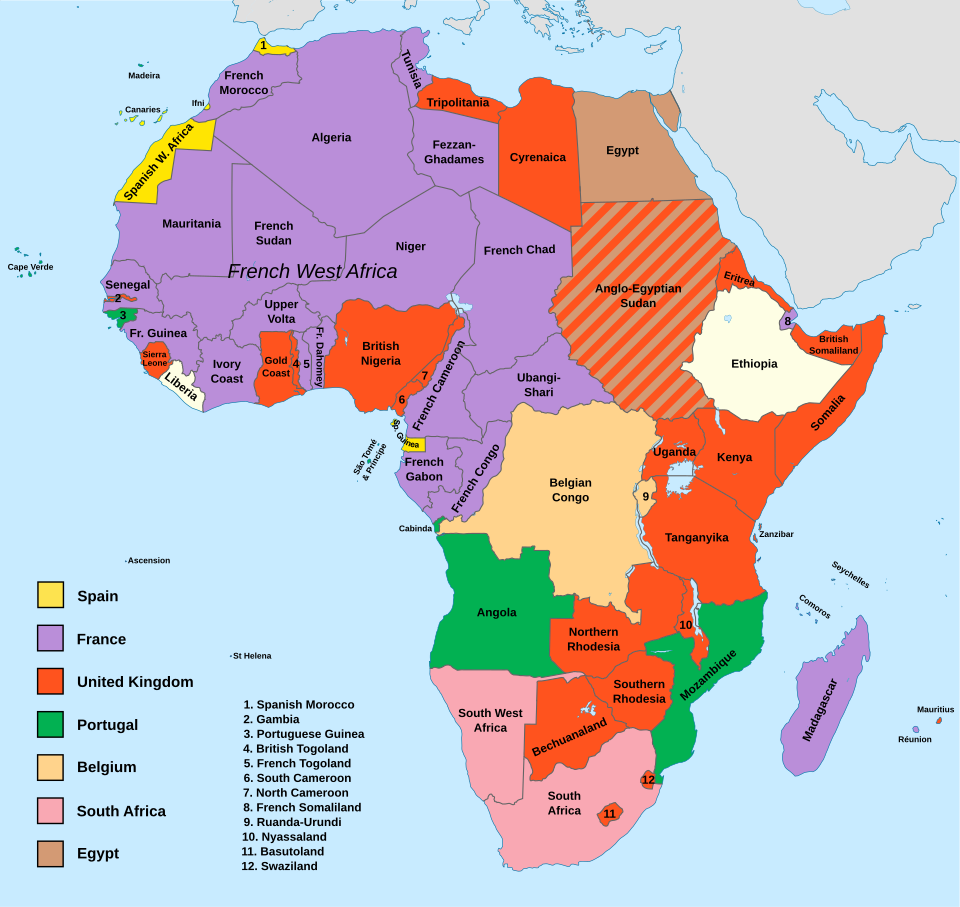
We are talking about getting to the source of the contradiction. The source of the contradiction is we are living in a world today that is a consequence of a colonial mode of production. Before the attack on Africa 600 years ago, there was no such thing as a world economy.
The world economy was pulled together as a part of that process. And this is where Africans were forcibly dispersed all around the world.
Venezuela itself came about as a consequence of that process. Cuba came about as a consequence of that process. And all of what we look at in the Americas in particular was born of that process and even Europe itself as a concept was born from this process that we are talkin’ about.
I am saying this [to] explain why we [are having] this meeting, Hands off Uhuru, Hands off Africa! Hands off the resistance. Hands off Africa because we recognize that it’s more than just something that is happening to us in North St. Louis, but they’ve attacked us in Kenya. They’ve attacked us in Jamaica, they’ve attacked us all around the world. So how do we pull it together to unite the resistance, organizationally, ideologically and what have you. That’s what we’ve been involved in doing.
And that’s why we are here in this meeting, with this Hands Off Uhuru. That’s why we opened up a Latin America front to bring organization and coherence to the struggle that we’re involved in throughout the Americas and throughout the world.
This is critical to our understanding of what it is that we have to do and how we have to fight back.
The first thing that we have to do is recognize that we are not looking at a Venezuelan problem. We [are] looking at a problem of colonialism. We [are] looking at a very wounded social system that relies on being able to continue to suck the blood of the colonized peoples of the world and we see that this colonial mode of production, the fabric of this whole system is rending all around the world.
It’s trending in Iran. They controlled Iran all this time. They had this puppet that they put in place to control Iran. They attacked Iran, not just this time, but early on in the 1950s when they overthrew Mohamed Mossadeg. They attacked Iran in 1980, when they facilitated the attack by Iraq on Iran, right after the revolution that happened in Iran, because they thought Iran would be too feeble to be able to fight back against what they’d done. But Iran fought them in the 1980s and fought for 8 years with a million people, at least, being killed in that struggle.
And it’s stupidity that they think they can run over to Iran right now and just take over and just bomb and kill some meters and everyone is going to surrender.
Che Guevara said it best. We call for two, three, many Viet Nams and that is what we need to understand when we talkin’ about a mode of production. He was able to say two, three, many Viet Nams because that was a time where Cuba, where the revolutionary forces around the world understood that we were looking at a single mode of production. And that they had to make them fight on every front.
That’s why he said many Viet Nams. He didn’t just simply go out and protest about what is happening in Viet Nam. He said more Vietnamese where you are! Two, three, many Viet Nams and that’s what we need to understand when we recognize that we are looking at a mode of production. And colonialism is a mode of production.
We hold some of the most serious mobilizations, demonstrations, protests that you can find. But that’s not what it is about. It’s about advancing the struggle against colonialism when they are behind enemy lines. They are among the colonizers. And what we have is a situation where the colonizer population is now recognizing its own culpability in what’s happening to the masses of people around the world on their watch, their name.
We are not gonna let them get away with it. We’re gonna say, “We know you don’t really support the people who are struggling in Venezuela, you don’t support the struggle in Iran.”
How the hell can you be against Palestinian colonialism on the one hand, when you are not against colonialism right here in St. Louis where you live? Right here in the United States, we see African people suffering these consequences.
Nobody even talks about the first nation people, the Indigenous population. This is a settler colony. And this is what has to be uprooted in the terms of the consciousness of the people here and around the world. That this country is a settler colony.
The Indigenous people, the land taken from them. Millions of them were exterminated, as part of the process of doing that.
How many kidnapped people? You want to talk about kidnapping? You’re gonna talk about what happened with Maduro, which is horrible, but I’m a kidnapped victim myself.
African people who live in the Americas are kidnapped victims, but the ones who claim to be sympathetic to what’s happening in Venezuela. I’m talking about white leftists. I’m talking about colonial leftists who do not struggle to end the kidnapping that’s happening to African people here; who do not struggle against the colonial domination of the indigenous people, do not struggle against the fact that something like half of Mexico was stolen from them. They are not involved in that struggle.
And I mentioned Indonesia. And the Bandung conference. That was an extraordinary conference. And then of course we know what the CIA induced in Indonesia in 1965 where they killed a million. The CIA initiated a process in Indonesia that killed a million Indonesians, to prevent this anti-colonial revolutionary movement from being successful. They assassinated people who were involved in the struggle against colonialism as a mode of production.
Che Guevara, he was born in Argentina but he went to Cuba and went to Mexico to fight for the Cuban Revolution. [He] went to Africa to try to initiate a continental wide guerilla war to overturn imperialism there, to overturn the whole colonial mode of production. He didn’t call it the colonial mode of production but that’s what he was fighting.
We have to do everything that the communists here have talked about. We have to recognize even when the comrades were talking about in Ecuador you know fighting for the working class, well you got to remember that the working class in Ecuador, I’m talking about the colonizers (working class). I’m talking about Indigenous people, the ones that were singing that song that we appreciate so much, etc., that they are in the situation they are as a consequence of the birth of the working class on the backs of the Indigenous people who are right there.
We have to fight as well as we can to achieve the science. Unite who can be united; and I’m not saying that we shouldn’t, I’m not some hardcore demagogic leftist or something to that effect.
We have to apply science to what is happening to us in the world and that means that we have to have cold blooded analysis and not simply be following an analysis that came 50, 100 years ago because that is what has been leading up to now.


